News & Annoucements
Home | News & Annoucements

Alameda Group: Medical Device Integration with SAP i.s.h.med — Blood Gas Analyzers&EndoStream
Overview
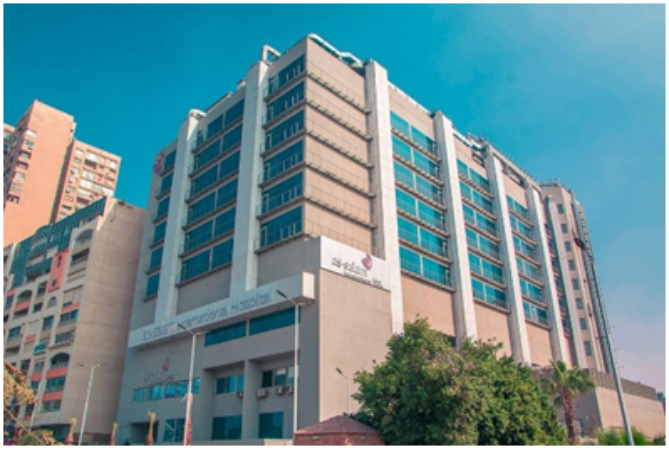
Alameda Group, a leading healthcare provider operating multiple hospitals and medical centers in Egypt, runs its clinical operations on SAP i.s.h.med. To close the gap between bedside devices and the electronic medical record, Alameda partnered with DigiMed to integrate clinical machines — including GEM Premier blood gas analyzers and the EndoStream endoscopy solution — directly with SAP.
The Challenge
Before the integration, device results lived outside the patient's electronic record:
The Solution
DigiMed designed a standards-based device integration architecture on top of the existing SAP landscape:
Benefits Achieved
The transformation delivered significant benefits across various dimensions:
By connecting bedside devices directly to SAP i.s.h.med, Alameda Group has removed a manual, error-prone step from its clinical workflow — improving patient safety, speeding up care decisions and protecting revenue, with an integration pattern that scales to any future device.
Alameda Group, a leading healthcare provider operating multiple hospitals and medical centers in Egypt, runs its clinical operations on SAP i.s.h.med. To close the gap between bedside devices and the electronic medical record, Alameda partnered with DigiMed to integrate clinical machines — including GEM Premier blood gas analyzers and the EndoStream endoscopy solution — directly with SAP.
The Challenge
Before the integration, device results lived outside the patient's electronic record:
- Manual transcription: Nurses and technicians re-typed analyzer results into the system, consuming clinical time and introducing transcription errors.
- Delayed availability: Critical results such as blood gases reached the treating physician only after manual entry, delaying clinical decisions.
- Lost charges: Procedures performed on devices were not always reflected in billing, causing revenue leakage.
- No audit trail: There was no reliable technical log connecting a device result to the patient record it updated.
The Solution
DigiMed designed a standards-based device integration architecture on top of the existing SAP landscape:
- HL7 via Mirth Connect:
Devices transmit HL7 ORU result messages to Mirth Connect middleware, which validates and transforms them into SAP-compatible structures. - Automatic service creation:
Validated results automatically create the corresponding service orders in SAP, linked to the correct patient, case and institution. - Institution-wise mapping:
A custom mapping table translates device test codes to SAP service codes per facility, maintained by key users without developer involvement. - Error handling & monitoring:
Failed messages are logged, alerted and reprocessed through a dedicated monitoring dashboard. - Pilot then rollout:
The solution was proven on a pilot analyzer and then rolled out across the remaining devices and facilities.
Benefits Achieved
The transformation delivered significant benefits across various dimensions:
- Zero manual entry:
Device results now post to the patient record automatically, releasing clinical staff from re-typing and eliminating transcription errors. - Complete charge capture:
Automatic service creation improved billable capture of device procedures - Scalable pattern:
The same Mirth/HL7 framework now serves as Alameda's standard for connecting future devices
By connecting bedside devices directly to SAP i.s.h.med, Alameda Group has removed a manual, error-prone step from its clinical workflow — improving patient safety, speeding up care decisions and protecting revenue, with an integration pattern that scales to any future device.


Useful Links
Our Solution
Contact Us
-
 +971 4570 8895
-
 Sales@dmtech.me
-
 B-18, Business Center, Sharjah Media City (Shams),
Al Messaned, Al Bataeh, Sharjah,
United Arab Emirates, PO Box 51500.
B-18, Business Center, Sharjah Media City (Shams),
Al Messaned, Al Bataeh, Sharjah,
United Arab Emirates, PO Box 51500.